
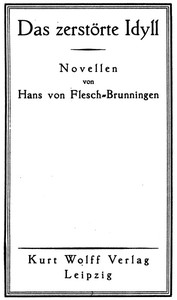
Das zerstörte Idyll: Novellen by Hans Flesch-Brunningen
Hans Flesch-Brunningen's Das zerstörte Idyll is a collection of novellas that feel like a series of elegantly framed snapshots from a world on the brink. The author, writing from the heart of the 20th century, captures a specific moment where old certainties were fading fast.
The Story
The book isn't one long story, but several shorter ones that share a common thread. We meet a painter who can no longer find inspiration in his peaceful village, a family whose genteel life is upended by a sudden scandal, and lovers whose perfect romance is tested by outside pressures. The setting is often the beautiful Austrian countryside or a cozy bourgeois home—places that seem safe and timeless. But Flesch-Brunningen shows us the cracks in the plaster. An unexpected letter arrives, a long-held secret is whispered, or the distant rumble of political change begins to shake the windows. The 'idyll'—that picture-perfect life—doesn't explode; it erodes, piece by piece, leaving the characters to figure out what's left.
Why You Should Read It
What got me was how real the characters feel. They aren't grand heroes facing epic battles. They're regular people who put a lot of faith in their quiet routines and their sense of place. Watching them grapple with change is deeply human. The writing is clear and vivid, not overly flowery, which makes the emotional punches land harder. You see the sun on the lake and feel the chill in the parlor. It's a book about loss, but also about resilience. It asks: After the idyll is gone, what do you build in its place?
Final Verdict
This is a book for readers who enjoy character-driven stories and a strong sense of atmosphere. If you liked the mood of Stefan Zweig's novels or the nuanced family dramas in some of Thomas Mann's shorter works, you'll find a friend here. It's also perfect for anyone interested in that pivotal period just before and after the World Wars, seen through the eyes of everyday people, not politicians. It's a quiet, thoughtful read that stays with you, like the memory of a place you once loved.
This text is dedicated to the public domain. You do not need permission to reproduce this work.
Barbara Davis
2 years agoThe clarity of the introduction set high expectations, and the way it handles controversial points with balance is quite professional. Highly recommended for those seeking credible information.
Jennifer Martin
7 months agoA brilliant read that I finished in one sitting.
James Davis
10 months agoI decided to give this a try based on a colleague's recommendation, the step-by-step breakdown of the methodology is extremely helpful for students. The insights gained here are worth every minute of reading.
Susan Gonzalez
3 weeks agoI appreciate the objective tone and the evidence-based approach.



David Perez
3 months agoThe digital index is well-organized, making research much faster.