
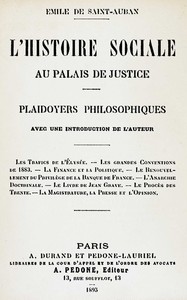
L'histoire sociale au Palais de justice. Plaidoyers philosophiques by Saint-Auban
Let's set the scene: France, from the late 1800s into the early 1900s. The courtrooms are formal, the laws are strict, and society's inequalities are often baked right into the system. Enter Émile de Saint-Auban, a lawyer with a different mission. This book isn't a novel; it's a collection of his actual 'pleadings'—the speeches he gave before judges. But calling them just legal arguments misses the point. Saint-Auban turned each case into something bigger.
The Story
There isn't a single plot, but a powerful through-line. Each chapter is a different case. You might see him defending someone impoverished accused of a minor crime, or arguing for more humane treatment. The 'story' is how he consistently uses his platform. He doesn't just talk about the specific law broken; he talks about why people end up in these situations—poverty, desperation, lack of opportunity. He forces the court to look at the human being behind the docket number. The drama comes from watching him navigate the formalities of the legal world to inject conversations about fairness, compassion, and social responsibility into a place not designed for them.
Why You Should Read It
First, it's surprisingly accessible. The language is formal, of course, but the passion and the clear moral stakes cut through. You feel like you're in the gallery. Second, it’s a masterclass in persuasion. Saint-Auban builds his cases not only on evidence but on appealing to a shared sense of justice. Reading it, you realize how arguments about social welfare and human dignity aren't new—they were being fought in gritty detail long ago. It connects the past to present-day conversations in a very direct way. Most of all, it’s inspiring. It’s a reminder that courage can look like standing up in a stuffy room and speaking hard truths to power.
Final Verdict
This is perfect for history buffs who want to go beyond kings and battles to the lived experience of justice, and for anyone interested in law, social change, or powerful rhetoric. If you enjoy biographies of principled people or real-life stories of dissent, you'll find a kindred spirit in Saint-Auban. It's not a light beach read, but it's a profoundly rewarding one that sticks with you. You'll walk away thinking differently about the power of a single voice in any era.
There are no legal restrictions on this material. Feel free to use it for personal or commercial purposes.
Jackson Miller
1 year agoA must-have for anyone studying this subject.
Anthony King
1 year agoHonestly, the author's voice is distinct and makes complex topics easy to digest. This story will stay with me.
Michelle Brown
1 year agoThe index links actually work, which is rare!
Amanda Clark
1 year agoIf you enjoy this genre, the arguments are well-supported by credible references. I would gladly recommend this title.










Emily White
6 months agoAs a professional in this niche, the way it handles controversial points with balance is quite professional. I’ll definitely be revisiting some of these chapters again soon.