
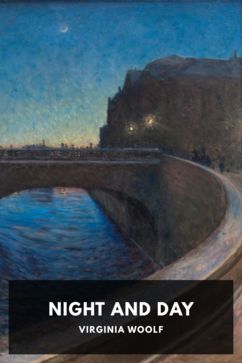
Night and Day - Virginia Woolf
Virginia Woolf's second novel, Night and Day, often gets overshadowed by her later, more experimental work. But don't let that fool you—this is a brilliant, deeply felt story about the search for a real life in a world of rules.
The Story
We follow Katharine Hilbery, the granddaughter of a famous poet. On paper, she has it all: intelligence, social standing, and a suitable, devoted admirer in the polished William Rodney. But Katharine feels like an actor in her own life, going through the motions for her family. Her real passion is for mathematics, a secret she keeps hidden as something unladylike.
Enter Ralph Denham. He's intense, poor, and fiercely independent. He's drawn to Katharine's hidden self, the person behind the proper facade. As their friendship grows, it throws everyone's plans into chaos. Katharine's friend Mary Datchet, a committed suffragist, shows another path—a life of political work and independence. The book watches these characters bump against each other and society's walls, trying to figure out if love, work, and honesty can ever fit together.
Why You Should Read It
What stunned me was how modern these characters feel. Katharine's quiet rebellion—her love of logic and numbers—is a powerful metaphor for any inner life we hide because it doesn't fit. Ralph's struggle isn't just about money, but about making a life that has meaning, not just a living. Woolf doesn't give us easy answers. The "right" choice is never obvious. She shows the real cost of choosing yourself, and the even greater cost of not choosing.
It's also surprisingly funny in parts. The stuffy literary parties at the Hilbery home, where everyone talks in circles, are painfully accurate. You'll recognize these people.
Final Verdict
This book is perfect for anyone who loves character-driven stories where the biggest battles happen in conversations and glances. If you enjoyed Pride and Prejudice but wished it spent more time inside Elizabeth Bennet's conflicted head, you'll love this. It's also a great, more accessible starting point if you've been intimidated by Woolf's later style. Give yourself over to its slow, thoughtful pace. It's not a page-turner in the usual sense, but it turns pages in your mind long after you finish.
This text is dedicated to the public domain. Knowledge should be free and accessible.
Richard Harris
2 years agoThe citations provided are a goldmine for further academic study.
Richard Anderson
2 years agoLooking at the bibliography alone, it manages to maintain a consistent flow even when discussing difficult topics. This should be on the reading list of every serious professional.
Jessica Jones
11 months agoRight from the opening paragraph, the bibliography and references suggest a high level of research and authority. It cleared up a lot of the confusion I had previously.




Linda Miller
5 months agoI decided to give this a try based on a colleague's recommendation, the transition between theoretical knowledge and practical application is seamless. It cleared up a lot of the confusion I had previously.