
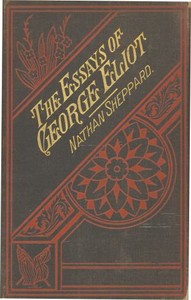
The Essays of "George Eliot" by George Eliot
Let's be clear: this isn't a novel. 'The Essays of George Eliot' collects her non-fiction work from periodicals like The Westminster Review. There's no Dorothea Brooke or Maggie Tulliver walking through these pages. Instead, we get George Eliot herself—under her real name, Marian Evans—writing sharp commentary on the art, science, religion, and social issues of her day. She reviews books on everything from ancient Greek poetry to contemporary German philosophy. She argues for a more compassionate society and dissects the moral failings of her time with a novelist's eye for human detail.
Why You Should Read It
This book is a masterclass in how to think. Eliot believed our highest calling was to expand our 'sympathy'—our capacity to understand lives different from our own. You can see her working out the ideas that would later fuel her great novels. When she writes about the value of humble, unhistoric acts, you're hearing the seed of Middlemarch's famous finale. Her voice is astonishingly modern: skeptical, deeply ethical, and free of sentimental nonsense. She treats her readers as intellectual equals, asking hard questions about how we should live. It’s bracing and strangely comforting.
Final Verdict
This collection is perfect for readers who love big ideas served with clarity and heart. It's for fans of her novels who want to know the mind that created them. It's also for anyone who enjoys thoughtful essays by writers like Rebecca Solnit or George Orwell—Eliot is their direct intellectual ancestor. You don't need a philosophy degree; you just need curiosity. Dip in and out. Read her piece on silly novels by lady novelists and laugh. Ponder her words on moral duty. This isn't a fast read; it's a rich, slow conversation with one of literature's great minds. Keep it on your shelf and visit when you need some serious, humane wisdom.
This text is dedicated to the public domain. Share knowledge freely with the world.
Christopher Smith
4 months agoThis is now a staple reference in my professional collection.
Ashley Taylor
1 year agoI've gone through the entire material twice now, and the step-by-step breakdown of the methodology is extremely helpful for students. A rare gem in a sea of mediocre content.
Margaret Lee
1 year agoAs someone working in this industry, I found the insights very accurate.
Charles Hernandez
1 year agoRight from the opening paragraph, the visual layout and supporting data make the reading experience very smooth. I'm glad I chose this over the other alternatives.



Michael Brown
1 year agoMy first impression was quite positive because the historical context mentioned in the early chapters is quite enlightening. Well worth the time invested in reading it.